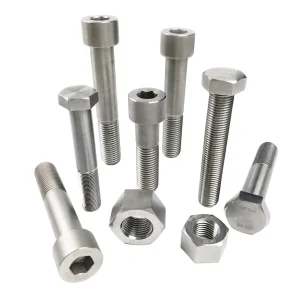
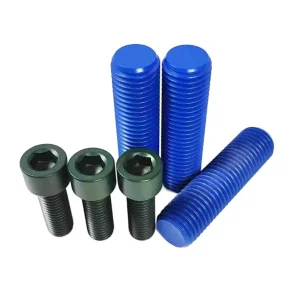
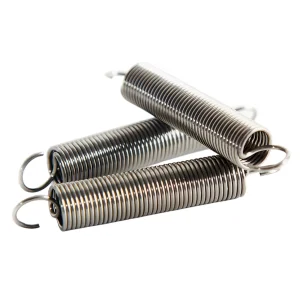
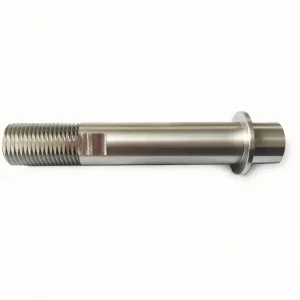
Explore our premium product portfolio designed for extreme environments, heavy-load applications, and high-precision fields.
In the modern precision manufacturing landscape, structural efficiency and aesthetic integrity must coexist. Self-tapping trim screws represent a critical evolutionary step in fastener engineering, blending thread-forming capability with low-profile, high-strength hardware designs.
Unlike standard self-tapping screws, which often feature large, conspicuous heads, trim screws are characterized by their reduced-diameter heads. This allows them to sink flush or below the surface of trims, panels, and thin sheet structures, making them indispensable in automotive assembly, aerospace panels, marine cabinetry, and high-end consumer electronics. By eliminating the necessity of separate tapping tools and securing components with high clamping forces, these specialized fasteners reduce production time, minimize material distortion, and optimize design flexibility.
This whitepaper provides an in-depth analysis of metallurgical profiles, structural dynamics, manufacturing capacities, and application engineering of self-tapping trim screws, highlighting the strategic manufacturing advantages provided by Beiersdorf Industrial Technology in Shanghai.
Delivering high-integrity joints through precise mechanical designs and advanced alloy composition.
The primary mechanical advantage of self-tapping trim screws is their ability to form or cut mating threads in host materials upon installation. Thread-forming configurations compress surrounding material without generating chips, preserving structural integrity in plastic panels and ductile metals. Conversely, thread-cutting configurations feature specialized cutting flutes that carve threads out of hard polymers or casting alloys, lowering the required drive torque.
Trim head profiles feature an angle typically between 82° and 90°, modified to narrow configurations. This enables deep seating without sacrificing the structural hold of the head. It provides a flush, aerodynamic, and snag-free finish, which is paramount in both high-speed transit vehicles and safety-critical operating rooms.
Material selection defines the operational lifespan of self-tapping trim screws. While carbon steels are typical for standard consumer goods, demanding industrial contexts demand advanced alloys:
| Material Specification | Tensile Strength (MPa) | Yield Strength (0.2% Offset, MPa) | Maximum Temperature Rating | Primary Industrial Application |
|---|---|---|---|---|
| Austenitic Stainless Steel A4-80 | 800 | 600 | 400°C | Marine fittings, coastal machinery, medical cabinets |
| Duplex Steel 2205 (UNS S32205) | 655 - 900 | 450 | 300°C | Offshore platform piping, chemical tankers |
| Inconel 718 (Nickel-Chromium) | 1240 - 1400 | 1030 | 700°C (up to 1200°C special) | Turbine engine components, aerospace exhausts |
| High-Tensile Titanium Alloy | 950 - 1050 | 880 | 450°C | Aerospace structures, racing vehicle trims |
| Custom Carbon Alloy (Heat Treated) | Up to 1900 | 1500 | 250°C | Heavy automotive body and suspension trims |
Pioneering cold-forming logistics and quality assurance protocols from our state-of-the-art production base in Shanghai.
Beiersdorf Industrial Technology (Shanghai) Co., Ltd. was established in 2015 and is located in the global industrial hub of Shanghai, China. Operating from a highly optimized 2,535 m² production base, we have developed a world-class infrastructure dedicated to special fasteners and ultra-high precision components.
China’s fastener supply chain offers unmatched structural advantages: vertical integration from smelting mills to final plating, unparalleled volume flexibility, and rapid engineering iteration. At Beiersdorf, we leverage this ecosystem and combine it with stringent proprietary QC protocols, offering our global clients highly reliable fasteners that meet European, American, and Asian industrial specifications.
“Product quality is the foundation for an enterprise's survival.” We strive for excellence by keeping “heart to sunshine, everything to prosperity” as our cultural compass, delivering premium quality on every consignment.
Every fastener is engineered to achieve zero-defect performance through rigid laboratory and warehouse protocols.
We have formulated the most stringent sampling and inspection systems. Using automated optical sortings, hardness testers, and salt-spray analyzers, we strive to achieve zero defects for all products leaving our facility.
With an integrated engineering team, our entire group holds more than 100 utility model patented products and eight invention patented products, demonstrating our continuous leadership in fastener engineering.
We currently manage nearly 100,000 product models. With 500 tons of special raw materials (superalloys, titanium) and over 10,000 tons of finished stainless steel standard parts in stock, we guarantee swift global distribution.
Addressing structural requirements across energy transit, maritime shipbuilding, and advanced communications.
Marine environments demand components that can withstand extreme chloride exposure, mechanical vibrations, and high pressure. Our range of special fasteners is engineered for the construction of specialized cargo ships, marine propulsion systems, yacht trim panels, offshore oil drilling platforms, submarine pipelines, offshore wind turbine housings, and port machinery.
These applications require fasteners compliant with international classification society standards. Our product catalog features high-integrity specifications including A4-80, A5-80, D8-80, D6-70, 2205 Duplex, ASTM A320 L7, 40CrNiMoA, Alloy 718 (Inconel), and EN14399 structural steel connection systems, all available with corresponding Classification Society certification.

Beyond shipbuilding, our products serve as primary components in other critical sectors:
Essential standards and quality parameters to look for when selecting high-precision self-tapping trim screws.
For global procurement departments, fastener failures represent significant operational and financial risks. When sourcing self-tapping trim screws, two critical risks must be addressed: hydrogen embrittlement in high-tensile carbon steels and thread galling in stainless steel alloys.
Hydrogen embrittlement occurs during electroplating when atomic hydrogen diffuses into the metal matrix under stress, leading to sudden, brittle failures. Beiersdorf prevents this by conducting precise post-plating baking cycles within strictly controlled timeframes. To address thread galling, we apply specialized anti-friction coatings (like PTFE, wax dispersions, or zinc-flake layers) that control friction levels during the self-tapping process, allowing for smooth installations without thread damage.
When evaluating manufacturers of self-tapping trim screws, procurement engineers should verify the following capabilities:
Technical answers to common questions about selecting and installing self-tapping trim screws.
Beiersdorf is more than a manufacturer; we are a technical consultant for critical fastening challenges. From initial alloy selection and torque analysis to custom manufacturing runs and logistics planning, our engineering team is ready to assist you.
Submit your mechanical drawings and structural specifications. Our engineers will reply within 24 hours.
A comprehensive inventory of specialty raw materials, non-magnetic alloys, and custom precision components.
 BSF
BSF