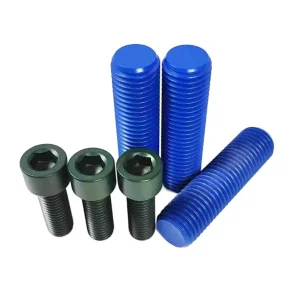
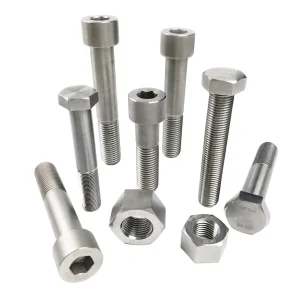
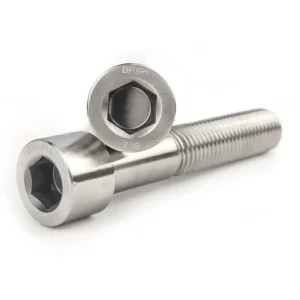
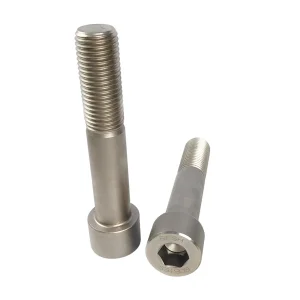
Low Temperature Fasteners Supplier & Suppliers in Canada

High-Performance Cryogenic Solutions for Canada's Harsh Industrial Environments

Send Inquiry Now

Industrial Reliability in Northern Latitudes: The Canadian Context

Canada’s industrial sector, ranging from the oil sands of Alberta to the offshore energy projects in Newfoundland and the high-tech precision manufacturing corridors of Ontario, demands materials capable of withstanding extreme environmental stress. Low-temperature fasteners are not merely "parts"—they are critical safety components. In cryogenic environments, where temperatures can plummet well below -50°C, standard steel fasteners become brittle, leading to catastrophic failure under stress.

As a leading supplier, we understand that Canadian industries require fasteners that maintain ductility and fracture toughness at sub-zero temperatures. Whether for LNG processing facilities, polar transport infrastructure, or heavy-duty mining machinery, our low-temperature fastener solutions are engineered to prevent cold-embrittlement.

🌐

Global Industrial Trends & The Evolution of Fastener Technology

The global fastener market is currently undergoing a paradigm shift. We are moving away from commodity hardware toward highly specialized, mission-critical fasteners. Key drivers include:

  • Material Science Innovation: Increased demand for nickel-based alloys and austenitic stainless steels that retain structural integrity in cryogenic (-196°C) and high-temperature (up to 1200°C) applications.
  • ESG & Durability: With a global focus on sustainability, industrial equipment lifespan is critical. High-performance fasteners reduce maintenance intervals and prevent leakages in energy transportation pipelines.
  • Standardization vs. Customization: While international standards like ASTM and DIN remain, global enterprises are seeking custom geometry and material compositions to solve specific engineering bottlenecks.
🇨🇳

The "China Factory" Advantage: Efficiency, Precision, & Quality Control

Why do global enterprises, including those in North America, source from China’s advanced manufacturing hubs? The answer lies in the integration of massive scale with hyper-precision.

At Beiersdorf Industrial Technology, our manufacturing philosophy blends traditional heavy-industry reliability with modern digital quality control. We operate under stringent ISO and ASTM certifications, ensuring that every batch of low-temperature fasteners undergoes rigorous chemical composition analysis and mechanical testing. Our efficiency allows us to provide:

  1. Direct-to-Factory Pricing: Eliminating intermediaries allows for significant cost savings without compromising on raw material grades.
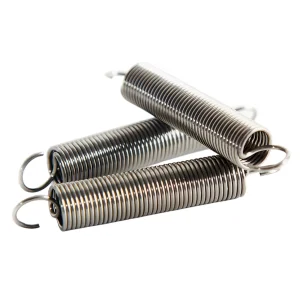
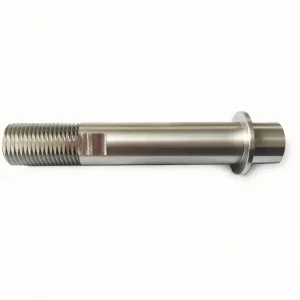
  2. Rapid Prototyping: Whether it's a custom titanium alloy bolt or a specialized spring wire component, our R&D cycle is optimized for speed.
  3. Massive Inventory: With 500 tons of special raw materials and 10,000 tons of finished stainless steel stock, we are the logistical partner that keeps global supply chains moving.
🏗️

Application Scenarios: Where Performance Matters

Our fasteners are deployed in the world's most demanding sectors:

  • Petrochemical & Cryogenic: LNG storage and transportation require fasteners that resist Hydrogen-Induced Cracking (HIC) and cold embrittlement.
  • Marine Engineering: Marine environments in Canada present a dual challenge: freezing temperatures and corrosive saltwater. Our A4-80 and D8-80 marine-grade fasteners are the standard for hull and deck equipment.
  • Precision Electronics & Medical: For the burgeoning high-tech sector, we provide ultra-high-precision machined parts where tolerance is measured in microns.

Frequently Asked Questions (FAQ)

Q: What makes your low-temperature fasteners suitable for the Canadian climate?

A: We use specific chemical compositions (e.g., high Nickel content) that lower the ductile-to-brittle transition temperature, ensuring our fasteners remain ductile even at -196°C, effectively preventing failure in extreme cold.

Q: Do you provide certification with your shipments?

A: Yes. We provide full material test reports (MTRs), mill test certificates, and, where required, third-party inspection reports to meet international project requirements.

Q: Can you handle custom small-batch orders?

A: While we are a high-capacity factory, we maintain a flexible production line capable of handling specialized custom orders for niche engineering projects, prototypes, and R&D requirements.