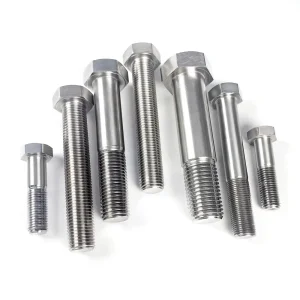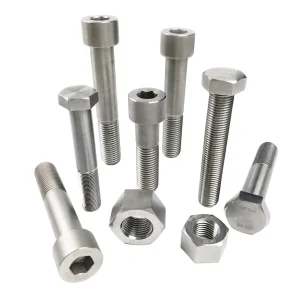
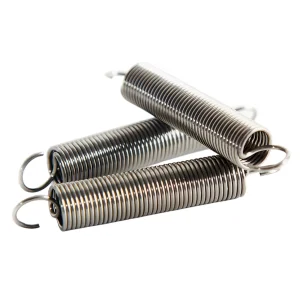
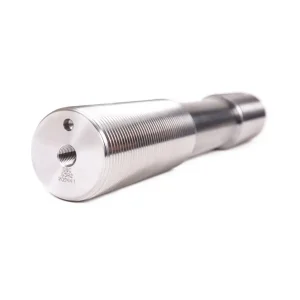
Established in 2015 and based in Shanghai, China, Beiersdorf Industrial Technology Co., Ltd. has grown to become an international powerhouse in the design, manufacturing, and supply of high-end specialty fasteners and ultra-high-precision components. Under our operational maxim, "Product quality is the foundation for an enterprise's survival", we blend global metallurgical mastery with localized supply chains to serve highly demanding industrial ecosystems like the Seattle-Tacoma-Bellevue metropolitan area.
The Seattle industrial corridor represents a complex intersection of cutting-edge aerospace engineering, rugged marine architecture, advanced subsea operations, and rapid-growth clean energy projects. These demanding applications require more than standard off-the-shelf fasteners. They demand high-strength alloys, custom non-magnetic properties, cryogenic performance stable down to -270℃, and extreme high-temperature load capacities up to 1200℃.
"At Beiersdorf, we match Seattle's culture of technology and environmental stewardship by delivering extreme-tolerance components certified by international classification societies."
The Seattle regional economy is defined by industrial giants and pioneering technology groups that demand the absolute highest level of safety and performance. From the heavy commercial vessels traversing Puget Sound and the Pacific Ocean to the aerospace engineering hubs in Renton and Everett, the integrity of a single bolt can determine the success or failure of multi-million dollar missions. High-strength stainless steel fasteners are the invisible backbone of this massive ecosystem.
Marine environments are notoriously hostile to carbon steel and standard alloys. In marine engineering applications around Seattle, shipbuilding companies, offshore infrastructure projects, and research vessels face constant challenges from chloride-induced stress corrosion cracking, galvanic corrosion, and mechanical fatigue under cyclic wave action. Standard 304 or 316 stainless steel grades often fall short in high-stress offshore rigs, propeller shaft brackets, and deep-sea pipelines. That is where super duplex stainless steels (such as Duplex 2205/2507) and specialized nickel alloys become mandatory, providing both high tensile strength (often exceeding 800 MPa) and superior Pitting Resistance Equivalent Numbers (PREN).
Seattle is historically rooted as the global capital of commercial aviation, and more recently, the hub for private space exploration and satellite array development. Aerospace applications demand extreme weight reduction coupled with ultra-high fatigue strength. Titanium alloy fasteners, such as Ti-6Al-4V (Grade 5), and nickel-cobalt-based superalloys (such as Inconel 718) are critical here. These materials maintain structural integrity during extreme thermal transitions and high vibration loads during launch profiles and supersonic flight. Furthermore, precision electronics in avionics demand non-magnetic fasteners to avoid electromagnetic interference with high-sensitivity guidance and navigation suites.
As the Pacific Northwest transitions into a leading region for hydrogen storage, distribution, and liquified natural gas (LNG) infrastructure, material behaviors under extreme cryogenic conditions have moved to the forefront. At temperatures down to -270℃, standard metals lose ductility and become highly brittle, risking catastrophic structural failure. Specially manufactured low-temperature fasteners maintain high impact toughness, ductility, and structural yield strength at near absolute zero, making them ideal for Seattle’s pioneering hydrogen energy grids, LNG shipping fleets, and superconducting medical diagnostic machinery.
Technical Highlight: We support critical industries with fasteners featuring tensile strengths of up to 1900 MPa, designed to withstand continuous operating temperatures of 1200℃ and cryogenic conditions down to -270℃.
We have formulated the most stringent sampling inspection system. Every single batch is subject to ultrasonic non-destructive testing, magnetic particle testing, and spectral chemical analysis to ensure absolute zero defects before leaving our factory.
Our engineering group holds more than 100 utility model patented products and 8 core invention patented products, continuously driving the optimization of grain structures in raw stainless steel, titanium, and cobalt alloys.
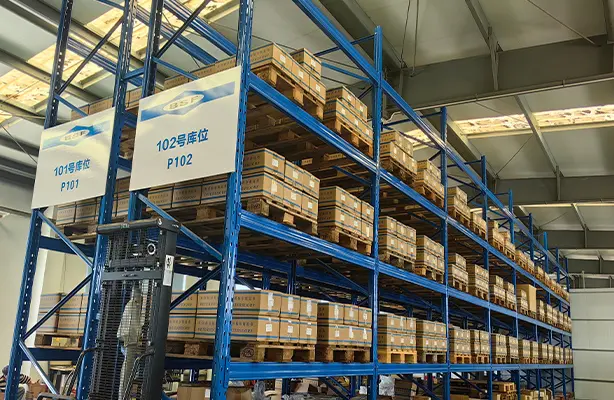
With nearly 100,000 product models cataloged, we maintain a rolling stock of over 500 tons of specialized raw materials and 10,000 tons of finished stainless steel standard parts to support rapid international fulfillment.
Purchasing managers and procurement directors in the global engineering supply chain face a delicate balancing act. They must source fasteners that comply with rigorous international standards (such as ASTM, ASME, DIN, ISO, and aerospace-specific NAS/MS standards) while maintaining project budgets. For many years, companies believed they had to choose between high-cost domestic manufacturers and low-quality imports. Beiersdorf rewrites this paradigm.
By keeping our core high-precision R&D center and state-of-the-art manufacturing plants optimized, we offer Western markets (especially high-growth corridors like Seattle) access to extreme-grade metallurgy at direct-from-factory pricing. We manage the entire supply chain risk. Our shipping lines, customs brokerages, and local logistics partnerships ensure that whether you are in Ballard, South Lake Union, or the Port of Everett, your parts arrive on time, fully certified, and with complete traceability back to the raw material melt.
We provide full chemical and physical test reports for all high-strength stainless steel fasteners. This includes mechanical properties tests (ultimate tensile strength, proof load, elongation, hardness), impact energy tests at negative temperatures, and microstructure analysis. Seattle marine contractors can purchase with absolute confidence knowing our fasteners are approved by classification societies for offshore platforms, cruise ships, and heavy naval vessels.
Industrial fastening is entering a new era driven by digitalization, smart materials, and strict carbon regulations. At Beiersdorf, we are committed to meeting these challenges ahead of time. Our future roadmap integrates three pillars of fastening technology development, which will play a critical role in supporting the growth of clean technologies across the Pacific Northwest:
Galvanic corrosion occurs when two dissimilar metals are in electrical contact in an electrolyte (such as salt water in Seattle's Elliott Bay). We prevent this through precise alloy selection, such as utilizing Duplex 2205 or super-austenitic stainless steels. When joining aluminum hulls or carbon fiber composite parts, we design fasteners with specific non-conductive oxide layers, PTFE coatings, or supply matching isolation bushings to break the galvanic circuit completely.
Ferritic steels experience a ductile-to-brittle transition temperature (DBTT) where they fracture easily under load. Our cryogenic fasteners are manufactured using stabilized austenitic stainless steels and nickel alloys (like Inconel 718) that maintain a face-centered cubic (FCC) crystal lattice. This structural configuration does not experience DBTT, preserving impact resistance and mechanical performance at temperatures down to near absolute zero (-270℃).
Our marine classification fasteners are certified to meet major international standards. We supply fasteners fully compliant with major Classification Societies such as the American Bureau of Shipping (ABS), Bureau Veritas (BV), DNV GL, and Lloyd's Register (LR). Every batch comes with material test reports conforming to EN 10204 3.1 or 3.2 standards, ensuring full traceability and high performance on commercial marine projects.
While standard stainless steel grades perform well under normal atmospheric conditions, they lose strength rapidly at elevated temperatures above 500℃ and are subject to oxidation. Inconel (a nickel-chromium superalloy) forms a stable, protective passivating oxide layer when heated, maintaining high yield strength and creep resistance at continuous operating temperatures up to 1200℃. This makes it ideal for gas turbine engines, exhaust manifolds, and rocket propulsion systems.
We combine advanced automated optical sorting machines with non-destructive testing (NDT) methods. Each batch goes through ultrasonic inspections to detect internal cracks, magnetic particle testing to spot surface flaws, and spectral testing to verify alloy composition. This level of quality control ensures our fasteners meet the strict requirements of aerospace and defense industries.
Whether you require specific mechanical properties, custom aerospace dimensions, or maritime classification certifications, our engineering team is here to assist. We offer complete technical guidance from initial alloy selection to final high-precision production.
 BSF
BSF