 BSF
BSF
1 / 4
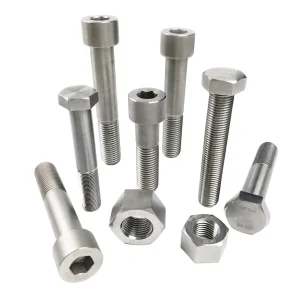
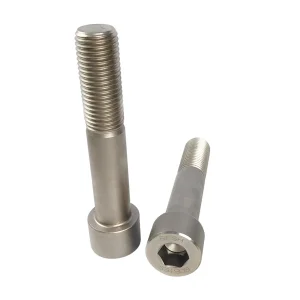
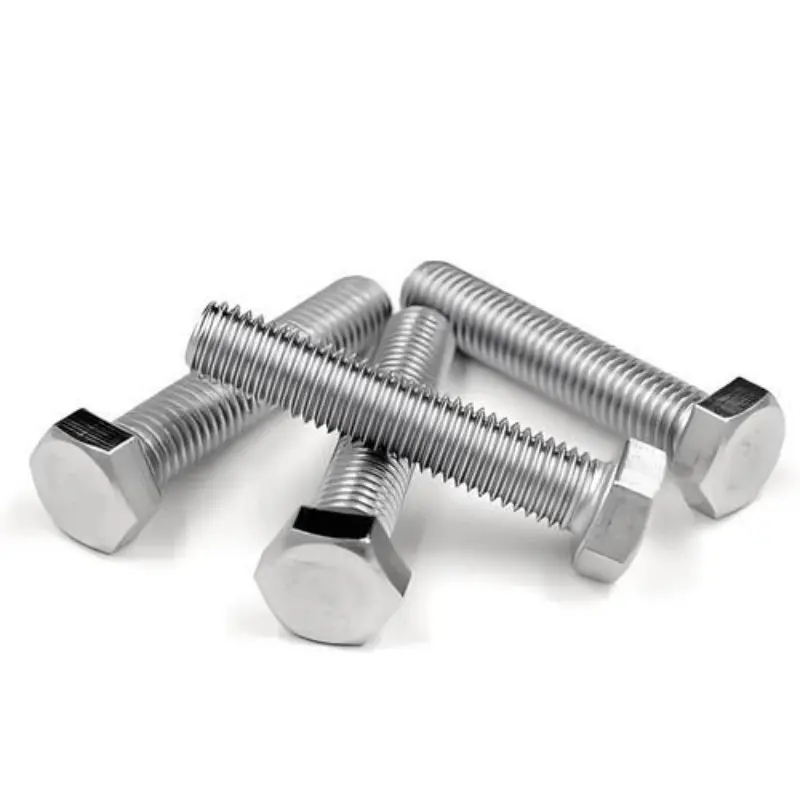
Titanium alloy fasteners take advantage of the completely non-magnetic property of titanium metal, which makes them suitable for precision machinery and aerospace applications, avoiding magnetic interference to the equipment.
Usually exhibits non-magnetic or weak magnetic properties, making it suitable for applications in electronic instruments and other scenarios.
Titanium alloy: Low density, high strength, strong corrosion resistance (especially seawater and chemical environments), and maintains performance at 500℃.
Austenitic stainless steel: Grades like 304, 316, etc., enhanced with Mo and Cu for superior cold working and corrosion properties.
Stainless steel fasteners may exhibit slight magnetic properties after cold heading due to processing stress—this is not a material defect. Authenticity should be determined through material certification and craftsmanship assessment rather than simple magnet tests.
Non-magnetic fasteners play an irreplaceable role in precision environments due to their unique anti-magnetic interference properties.
Used for fixation in magnetic resonance imaging systems to ensure imaging accuracy and prevent field interference.
Satellite and aircraft components made of non-magnetic materials (like beryllium-cobalt copper) avoid interfering with gyroscopes.
High-frequency signal transmission components connected via non-magnetic connectors to reduce signal distortion.
Spectrometers and high-precision measuring tools use these to prevent signal drift.
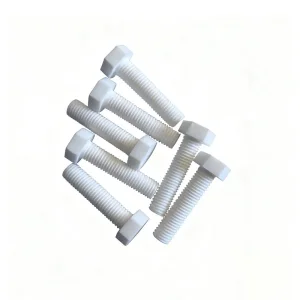
Superconducting quantum bits are extremely sensitive to magnetic fields; PEEK or non-magnetic metal fasteners are essential.
Amorphous alloy bolts are used in transformer cores to reduce eddy current losses.
| Our Non-Magnetic Series Stainless Steel | ||
|---|---|---|
| A286 | 1.498 | Gr.660 |
| OCr21Ni6Mn9N | OCr16Ni22Mn9Mo2 | 1.4436 |