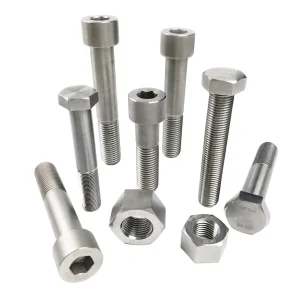
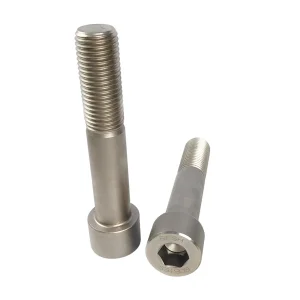
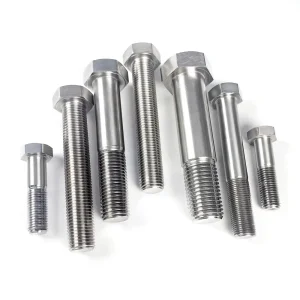
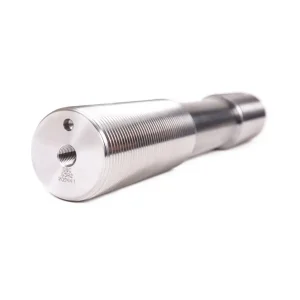
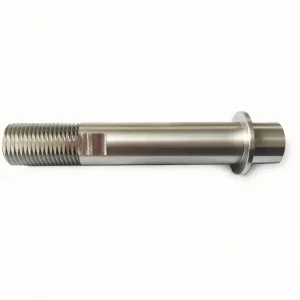
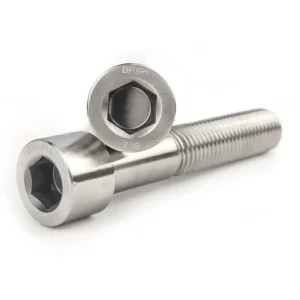
In the modern engineering landscape, the selection of fasteners is not merely a procurement decision—it is a critical design choice affecting structural integrity and aesthetic finish. Stainless steel countersunk bolts are the gold standard for applications requiring a flush surface finish without compromising corrosion resistance.
Global demand is shifting away from generic commodity fasteners toward high-performance, application-specific solutions. Industries such as marine engineering, semiconductor manufacturing, and renewable energy are demanding tighter tolerances and superior material science. Countersunk bolts, when precision-engineered, allow for aerodynamic efficiency and safety in high-load scenarios.
The "China Factory 4.0" initiative has transformed the fastener industry. By integrating AI-driven quality control—like the "Hash Detection" systems used by industry leaders—Chinese manufacturers have bridged the gap between high-volume production and precision craftsmanship. This evolution ensures:
Beiersdorf Industrial Technology (Shanghai) Co., Ltd. is an enterprise mainly engaged in the business of special fasteners and ultra-high precision components. Established in 2015, we emphasize that "Product quality is the foundation for an enterprise's survival."
Our group holds over 100 utility model patents and 8 invention patents, ensuring we stay at the forefront of fastener innovation.
We manage 100,000 product models with 500 tons of raw materials and 10,000 tons of finished stock.
Strict sampling inspection systems striving for zero defects in every unit shipped.
Stainless steel offers exceptional corrosion resistance, making it ideal for environments exposed to moisture, chemicals, or extreme temperatures. The countersunk design allows the bolt head to sit flush with the surface, which is vital for preventing snagging and improving drag coefficients in aerospace and automotive designs.
Leading Chinese manufacturers utilize Industry 4.0 protocols, including automated optical sorting, spectral analysis for material verification, and rigorous load-testing to meet international standards (ANSI, DIN, JIS).
Yes. Customization includes material selection (e.g., Inconel, Titanium, Specialized Stainless), head styles, thread pitch, and surface coatings to meet specific environmental demands.
 BSF
BSF