Explore our core custom component offerings engineered for maximum mechanical shear resistance, temperature stability, and corrosion protection.
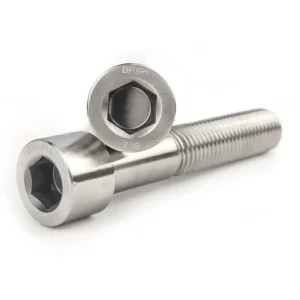
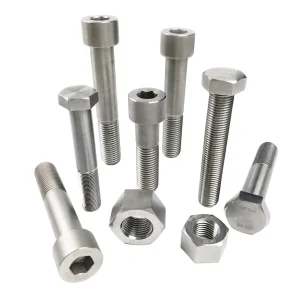
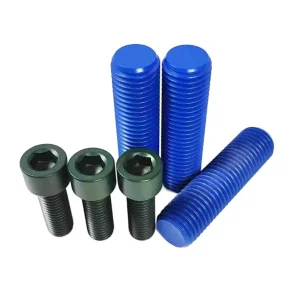
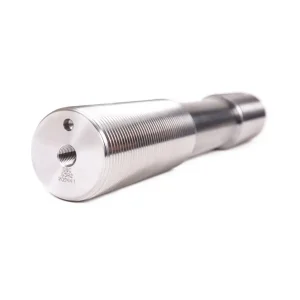
In high-precision assembly lines, the choice of fastening components represents the fine line between structural failure and long-term durability. Custom Self-Tapping Phillips Screws are not merely commodities; they are highly engineered elements that construct their own threads when driven into pre-drilled or self-drilled materials. This dual capability—forming or cutting threads—optimizes installation speed, reduces structural component count, and minimizes overall tooling costs.
For industrial designers and global procurement managers, partnering with qualified exporters is a critical strategic decision. The complexity of material interfaces requires screws with precise thread pitches, specialized lead threads, hardened surface matrices, and optimized Phillips drive depths to prevent premature tool cam-out. In this document, we explore the deep metallurgical science, application profiles, quality assurance measures, and geopolitical supply advantages that Beiersdorf Industrial Technology brings to global assembly supply chains.
Understanding user intent in industrial applications means defining how self-tapping screws function on a microscopic level. Self-tapping screws are generally classified into two structural behaviors:
Through our advanced manufacturing parameters, Beiersdorf produces customized geometries incorporating both behaviors. Our engineering team refines thread geometries, case-hardening profiles, and surface plating formulations to match the mechanical resistance required by your substrate's density.
Beiersdorf Industrial Technology integrates advanced research, comprehensive testing, and logistics to ensure seamless execution for international buyers.

We have formulated the most stringent sampling inspection system, utilizing automated optical sorting and dimensional verification to strive to achieve zero defects for the products out of our factory.

Our engineering group maintains more than 100 utility model patented products and eight invention patented products, driving innovation in fastening technology and metallurgical performance.

We operate nearly 100,000 product models. To ensure short lead times, we maintain 500 tons of special raw materials and 10,000 tons of finished stainless steel standard parts in stock.
Our custom self-tapping Phillips screws and specialized fasteners are deployed across high-demand industrial sectors worldwide.
Our special fasteners are widely used in the field of shipbuilding and oceanography engineering, specifically in the manufacture of special ships, marine propulsion, marine accessories, yacht manufacturing, offshore oil drilling platforms, submarine pipelines, offshore wind power, underwater lifeboats, port machinery, dock construction, etc.
These special fasteners mainly include A4-80, A5-80, D8-80, D6-70, 2205, L7, 40CrNiMoA, 718, EN14399 steel structure connection pair, classification society certificate fasteners, and related high-strength marine-grade alloys.

In the globalized industrial landscape, supply chain resilience is a core competitive factor. Operating from our 2,535 m² production base in Shanghai, Beiersdorf Industrial Technology leverages China's advanced industrial ecosystem. We integrate high-speed multi-station cold heading machines, precision thread rollers, and automated continuous heat-treatment furnaces to secure repeatable tolerances across high-volume production runs.
By digitizing our warehouse management and procurement workflows, we achieve real-time tracking from raw wire rod receipt to final component shipment. Our strategic location in the Yangtze River Delta logistics hub enables direct access to deep-water shipping lanes, minimizing transit times to North American, European, and Asia-Pacific ports. Furthermore, our raw material security model—consisting of 500 tons of specialty alloys and over 10,000 tons of finished stainless steel fasteners—insulates our partners from macro-market price volatility and sudden material supply shortages.
At Beiersdorf, Factory 4.0 is not merely about machinery; it is about data-driven process control. Every batch of custom self-tapping Phillips screws undergoes statistical process control (SPC) monitoring. By collecting performance data at the cold-heading, threading, and heat-treating stages, we can dynamically adjust tool pressures and heat profiles. This prevents typical defects such as internal heading micro-cracks, hydrogen embrittlement, or uneven plating, ensuring our fasteners perform reliably under extreme stress.
As industries move toward smart manufacturing, lightweight structural designs, and sustainable materials, the technical requirements for fasteners are evolving. The Beiersdorf R&D roadmap targets three primary areas:
Conventional zinc plating and galvanizing are being replaced by multi-tier organic coatings, nano-ceramic layers, and thin-film anti-corrosion barriers. Our research focusing on eco-friendly passivation layers ensures that our custom self-tapping fasteners exceed 1,500 hours of neutral salt spray testing without red rust, complying with RoHS and REACH requirements.
With the miniaturization of electronic devices, telecom modules, and medical instruments, we are expanding our custom miniature screw catalog to include sizes below M1.0. These micro-screws feature optimized Phillips and Torx drives, demanding sub-micron dimensional tolerances and ultra-clean surface treatments to prevent electronic component contamination.
We are advancing the development of titanium, cobalt, and nickel-alloy fasteners to meet the weight-reduction demands of rail transit and marine applications. By combining lightweight structural designs with high tensile strengths (up to 1900 MPa), we enable engineering teams to use fewer fasteners per joint without sacrificing safety or mechanical performance.
Procuring industrial fasteners from an international exporter requires strict alignment with localized norms and standardizations. At Beiersdorf, we match global regulatory landscapes to ensure frictionless import and structural compliance:
Our localized technical support team bridges the gap between Shanghai engineering and your project site. We provide early-stage raw material consultation, shear and tensile calculation support, and installation torque guidelines to optimize assembly performance and prevent stripping issues during high-speed production.
Detailed technical answers to common engineering questions regarding custom self-tapping Phillips screws and specialized high-performance fasteners.
A: Self-tapping screws (Type A, AB, B, etc.) require a pre-drilled or pre-punched pilot hole. They form or cut threads as they are inserted. Self-drilling screws (often called TEK screws) feature a integrated drill point tip that creates the pilot hole, cuts the threads, and secures the joint in a single action, eliminating pre-drilling operations.
A: High-strength carbon and alloy steels are susceptible to hydrogen embrittlement following electroplating. We implement a strict post-plating baking process (hydrogen relief baking) within 4 hours of electroplating, holding the parts at 190°C to 220°C for at least 4 to 8 hours depending on structural thickness, ensuring optimal material ductility.
A: For marine or highly corrosive environments, we recommend A4-80 (Grade 316) or Duplex Stainless Steel 2205 fasteners. These alloys offer superior resistance to pitting and crevice corrosion compared to standard A2 (304) stainless steel, especially when exposed to seawater or saline mist.
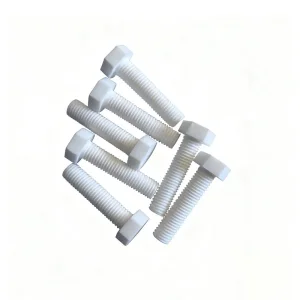
A: Lightweight plastic fasteners (typically PEEK, Nylon, or PVDF) are designed for low-load applications where electrical insulation, magnetic neutrality, and chemical resistance are critical. For load-bearing structural joints, high-strength titanium or cobalt-alloy fasteners are recommended.
A: We utilize advanced high-temperature alloys, including Inconel 718, Inconel 625, and high-purity nickel-cobalt formulations. These alloys undergo specialized solution annealing and precipitation hardening, preventing thermal creep, grain boundary oxidation, and mechanical degradation at extreme operating temperatures.
Jan 24, 2025 - The industrial landscape is shifting toward circular economy principles and sustainable coating technologies. Beiersdorf is leading this change by implementing chromate-free surface finishes and energy-efficient cold-forming processes.
Jan 24, 2025 - We have completed the physical renovation and digital integration of our Shanghai central warehouse, incorporating IoT-enabled inventory tracking to accelerate order fulfillment times for international partners.
Jan 24, 2025 - Celebrating our foundation, Beiersdorf Shanghai remains committed to providing professional fastener engineering consultation, custom material formulations, and reliable export logistics.
Our fasteners are exported to key industrial regions including Europe, North America, Southeast Asia, and the Middle East, meeting international engineering specifications.

Beiersdorf is more than a supplier; we provide technical consultation and engineering guidance, including raw material selection, joint torque calculation, and post-installation support.
If you require custom self-tapping Phillips screw configurations, metallurgical analysis reports, or bulk price quotations, contact our Shanghai headquarters directly.
Call Technical Support: +86(0)21-38022886Submit your application parameters, drawing files, or material specifications, and our engineering team will respond within 24 hours.
Explore our specialized components catalog, engineered to support critical infrastructure projects and high-tolerance industrial assemblies.
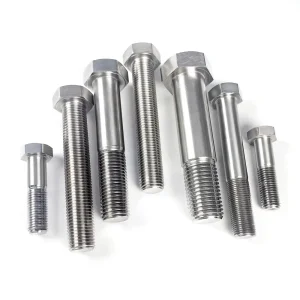
 BSF
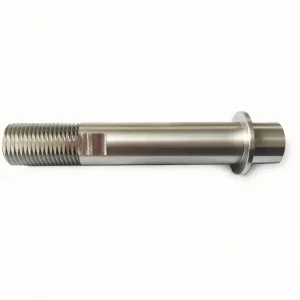
BSF