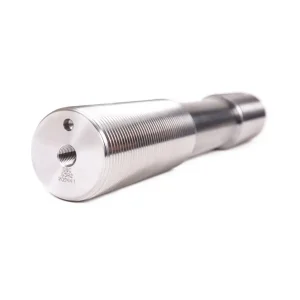
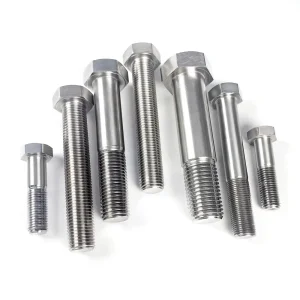
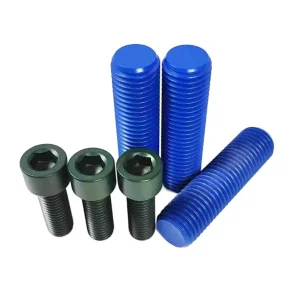
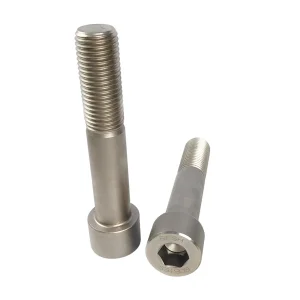
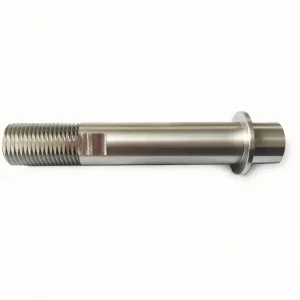
In the modern industrial ecosystem, the reliability of a structure is only as strong as its smallest component: the fastener. As we navigate the complexities of Industry 4.0, the demand for custom corrosion-resistant bolts has transcended traditional manufacturing. Today, it is about Molecular Metallurgy, Supply Chain Resilience, and Computational Engineering.
Corrosion-resistant fasteners are no longer just "stainless steel." We are witnessing a shift toward Super Duplex, Inconel, Titanium, and Nickel-based alloys. These materials are engineered to withstand extreme cryogenic temperatures (down to -270°C) and aggressive high-temperature environments (up to 1200°C). By utilizing advanced vacuum induction melting (VIM) and electroslag remelting (ESR), we ensure that the micro-structure of the alloy provides maximum fatigue resistance for maritime and petrochemical applications.
The Chinese manufacturing sector has evolved from high-volume production to "High-Precision, High-Value" intelligence. Our "Factory 4.0" approach integrates IoT-enabled quality inspection systems. Every batch of bolts undergoes rigorous hash detection and spectroscopic analysis, ensuring that our output meets the stringent requirements of Global Classification Societies like DNV, ABS, and BV.
Global procurement teams are currently prioritizing Risk Mitigation and Total Cost of Ownership (TCO). Rather than sourcing from fragmented suppliers, leading corporations are partnering with manufacturers that offer full lifecycle support: from material selection to post-installation maintenance. Our integration of R&D, warehousing, and production allows for a 30% reduction in lead times while maintaining a defect rate approaching zero.
Corrosion resistance is determined by the alloy composition (e.g., Nickel, Chromium, Molybdenum content) and surface treatment. In marine environments, we recommend A4-80 or Duplex steel to prevent chloride-induced pitting.
China has adopted industry 4.0 standards, offering superior supply chain agility, massive scale for raw material procurement (reducing cost), and advanced quality control systems that meet international classification society standards.
Yes, we specialize in low-temperature fasteners that retain stability and toughness from -270℃ to 0℃, ideal for LNG carriers and cryogenic energy storage.
 BSF
BSF