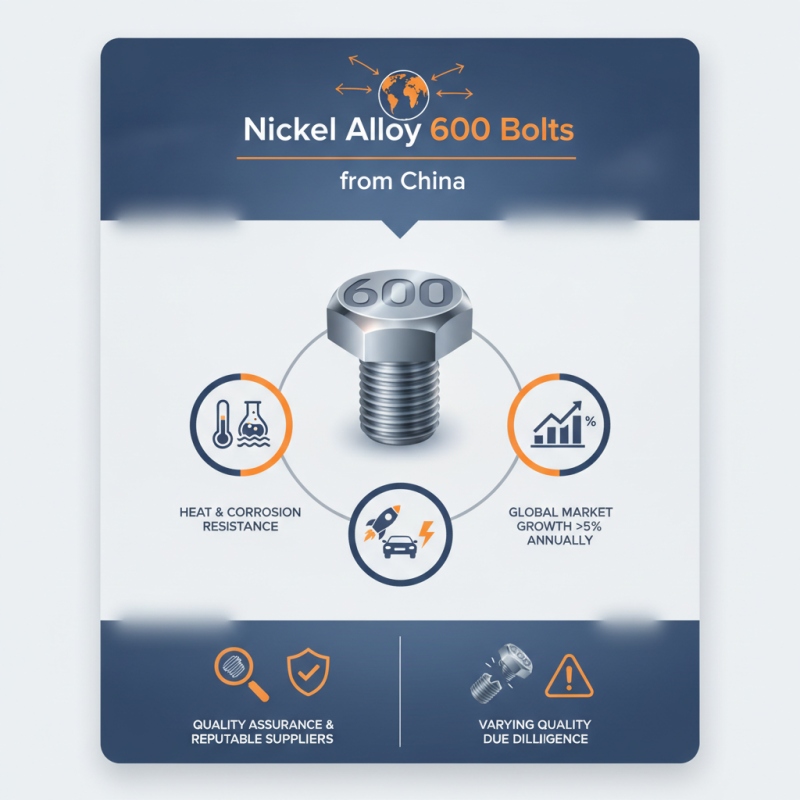
In the competitive landscape of industrial fasteners, China stands out as a leading supplier of Nickel Alloy 600 Bolts. This high-performance alloy exhibits excellent resistance to heat and corrosion, making it ideal for demanding applications. Reports indicate that the global nickel alloy market is projected to grow significantly, driven by increased demand in sectors such as aerospace, automotive, and energy.
The demand for Nickel Alloy 600 Bolts is particularly notable in industries requiring reliability and strength. According to a recent market analysis, the aerospace sector alone is expected to see a substantial increase in the use of nickel alloys, with a forecasted growth rate of over 5% annually. However, sourcing high-quality Nickel Alloy 600 Bolts can sometimes be a challenge, as the quality can vary widely among suppliers.
Despite the advantages, buyers must remain vigilant about quality assurance. Some manufacturers may provide products that don't meet quality standards. It is essential for global buyers to conduct thorough due diligence. Engaging with reputable suppliers who adhere to international standards can mitigate these risks and ensure reliable sourcing of Nickel Alloy 600 Bolts for various applications.
Overview of Nickel Alloy 600 and its Applications
Nickel Alloy 600 is a versatile material widely used in various industries. Its unique composition offers excellent resistance to oxidation and corrosion. This makes it suitable for environments exposed to high temperatures. Many industries depend on its strength and stability.
Applications of Nickel Alloy 600 are diverse. It plays a crucial role in chemical processing, aerospace, and power generation sectors. In chemical processing, it withstands harsh chemicals effortlessly. In aerospace, it is integral in manufacturing aircraft components. Its reliability ensures safety and performance in critical situations.
While its benefits are notable, challenges remain. The cost of Nickel Alloy 600 can be high, impacting many projects. Additionally, sourcing can be complicated, especially for small manufacturers. These factors should be considered when selecting materials. Weighing the pros and cons is essential for success in any application.
Key Features and Benefits of Nickel Alloy 600 Bolts
Nickel Alloy 600 bolts are known for their exceptional strength and resistance to high temperatures. This alloy is primarily composed of nickel, chromium, and iron, which grants it remarkable durability in harsh environments. According to a report by the Global Nickel and Nickel Alloy Market, the demand for Nickel Alloy 600 bolts is estimated to grow by 3% annually through 2026. Marine, aerospace, and chemical processing industries increasingly rely on these bolts due to their reliability.
One standout feature is their corrosion resistance. Nickel Alloy 600 withstands oxidation in high-temperature settings. For instance, it can perform well in environments exceeding 1,000°F (538°C) without significant degradation. This characteristic makes it a superior choice for applications exposed to severe conditions. Industry data indicates that around 80% of materials used in extreme environments struggle with long-term use.
Beyond corrosion resistance, these bolts also possess excellent fabrication properties. They can be welded or formed easily, which increases design versatility. However, users must be mindful of their costs. Nickel prices can fluctuate, impacting the overall expense. Ultimately, while Nickel Alloy 600 bolts provide distinct advantages, professionals must weigh performance against budget constraints to ensure optimal selection.
China’s Leading Manufacturers of Nickel Alloy 600 Bolts
China has established itself as a leading manufacturer of nickel alloy 600 bolts, catering to a growing demand in various industrial sectors. This nickel alloy is known for its excellent corrosion resistance and high-temperature strength, making it suitable for applications in chemical processing, aerospace, and nuclear industries. Recent industry studies indicate that the market for nickel alloys is expected to grow at a compound annual growth rate (CAGR) of over 5% from 2023 to 2028, underscoring the significance of robust supply chains in this sphere.
Chinese manufacturers are leveraging advanced technology and expertise in producing nickel alloy 600 bolts. Reports highlight that these manufacturers benefit from lower production costs and access to a vast supply of raw materials. However, challenges remain. Quality control can sometimes be inconsistent, leading to concerns about reliability. Addressing these issues is crucial, as stringent quality assurance processes could further enhance the competitive edge of Chinese products in international markets.
The global demand for nickel alloy 600 bolts continues to rise amid economic recovery and infrastructure projects. For buyers, ensuring compliance with quality standards and specifications is essential. Trade statistics show that exports of nickel alloys from China have increased significantly, reflecting both market trust and the need for continuous improvement in manufacturing practices. Quality assurance and innovations in production processes will be vital for maintaining this positive trajectory.
Global Market Trends for Nickel Alloy 600 Bolts
The global market for Nickel Alloy 600 bolts is experiencing notable trends. These bolts are known for their exceptional resistance to heat and corrosion. Industries such as aerospace, chemical processing, and power generation rely heavily on these materials. Recent demand has surged, driven by a focus on durability and performance.
China has emerged as a leading supplier in this market. Their production capabilities allow for consistent quality and competitive pricing. However, challenges exist. Some manufacturers struggle with adhering to international standards. This inconsistency can lead to buyer doubts and affect market reputation.
Sustainable practices are becoming increasingly important. Buyers are now seeking manufacturers who prioritize eco-friendly production. This shift reflects a growing awareness of environmental impacts. Industry players must adapt to these changing demands. Only by embracing transparency and sustainability can they build trust and ensure future growth.
Purchasing Considerations for International Buyers of Nickel Alloy 600 Bolts
When purchasing Nickel Alloy 600 bolts, international buyers must consider several key factors. This alloy is known for its high resistance to corrosion and extreme temperatures, making it ideal for various industrial applications. According to a report by Grand View Research, the global nickel alloy market is projected to reach $54 billion by 2025. This highlights the increasing demand for high-quality alloys in various sectors.
Quality assurance is crucial. Buyers should request certifications that demonstrate compliance with industry standards. Independent testing can verify the mechanical properties and corrosion resistance of the bolts. Lack of proper documentation can lead to costly failures in demanding environments. Additionally, it’s important to assess the supplier's manufacturing processes and quality control measures. Understanding these aspects can provide insights into the reliability of the products.
Pricing also warrants careful examination. Buyers often face fluctuating prices due to global nickel supply chain issues. The cost can vary considerably based on market conditions and raw material availability. Comparing quotes from multiple suppliers can reveal significant discrepancies. Buyers need to evaluate not just the price but also the quality and service associated with those quotes. Every choice has its consequences; thus, thorough research and analysis are essential.
Conclusion
Nickel Alloy 600 Bolts are gaining significant attention in various industries due to their excellent resistance to high temperatures and corrosion. This alloy is widely used in applications ranging from chemical processing to aerospace, thanks to its unique properties, including strong mechanical strength and versatility. As international demand rises, China's leading manufacturers are stepping up to supply high-quality Nickel Alloy 600 Bolts, catering to global buyers seeking reliable and durable fastening solutions.
The global market for Nickel Alloy 600 Bolts is evolving, with trends indicating an increased focus on performance and sustainability. Buyers must consider critical factors such as material certifications, production capabilities, and pricing when sourcing these bolts. Overall, Nickel Alloy 600 Bolts represent a vital component for industries requiring advanced materials that can withstand challenging environments, making them a preferred choice for many international projects.

 BSF
BSF